Logo
  • Ko Wai Mātou
    About Us
    Ko Wai Mātou

    NGĀ PAE O TE MĀRAMATANGA | New Zealand's Māori Centre of Research Excellence

    Ko Wai Mātou
    About Us
    NPM Whānau | Our People Pou Whainga | Our Mission Hītori | History Te Tira Takimano | Our Partners Pūrongo ā Tau | Annual Reports Whakapā Ma | Contact Us
  • Rangahau
    Our Research
    Rangahau

    NGĀ PAE O TE MĀRAMATANGA | New Zealand's Māori Centre of Research Excellence

    Rangahau
    Our Research
    Our Research Outputs Rapua Rangahau | Search our research Matakitenga Research Framework Pūrongo Rangahau | Project Reports Pukapuka | Books Te Arotahi | Policy Papers AlterNative Journal MAI Journal Replay Media | Our Videos
  • Manaaki
    Grants & Support
    Manaaki

    NGĀ PAE O TE MĀRAMATANGA | New Zealand's Māori Centre of Research Excellence

    Manaaki
    Grants & Support
    Kaiwhiwhi | Award Recipients Te Kupenga o MAI > MAI | About > MAI | Doctoral Conference > MAI | Events
  • Kawepūrongo
    News & Events
    Kawepūrongo

    NGĀ PAE O TE MĀRAMATANGA | New Zealand's Māori Centre of Research Excellence

    Kawepūrongo
    News & Events
    E-panui He kōrero | Our stories Hui | Events Past Conferences Past Seminars Past Symposia Past Workshops & Webinars Wānanga Paetukutuku IICCRS | International Indigenous Climate Change Research Summit

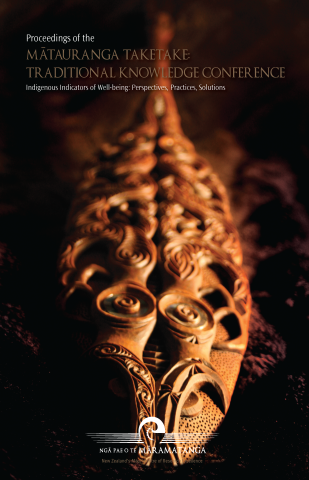
Proceedings of the Mātauranga Taketake - Traditional Knowledge Conference 2006 - Indigenous Indicators of Well-being: Perspectives, Practices,

Image

Year of publication

2006

Publication type

Conference Proceedings

Publisher(s)

Ngā Pae o te Māramatanga

Editor(s)

Dr J. S. Te Rito

The Mātauranga Taketake: Traditional Knowledge Conference was convened in June 2006 to address issues, practices, models and perspectives for protecting, sustaining and nurturing traditional systems of knowledge. The Conference invited participants to consider the following questions:

How do we know that our knowledge, ways of knowing and associated practices are in a state of wellbeing?

What practices do we use to sustain and help the next generation look after our systems of knowledge?

How do we know that our relationships, languages, literatures, stories, environments,healing practices, spiritualities, genealogies, bodies, children, elders, women, men, and communities are flourishing?

What are the basic indicators that we use to give us confidence that all is well?

How do wemeasure our development and advancement?

Internationally generated indicators of well-being, like indicators of development, have a subtle but significant impact on Māori and other indigenous communities. An international conference with associated community workshops and satellite meetings enabled us to bring together in dialogue a wide range of participants, perspectives, voices, frameworks and models for developing indicators that best indicate well-being from indigenous points of view.

Download File
Document
2006 Conference Proceedings

  • AlterNative

    An International Journal of Indigenous Peoples is our peer-reviewed interdisciplinary scholarly journal.

  • MAI Journal

    A New Zealand Journal of Indigenous Scholarship is our open access scholarly journal.

  • MAI Portal

    Our national Māori and Indigenous (MAI) Post-Graduate Network.

  • Rangahau

    Search our Kete Mātauranga for over 20 years of rangahau including projects, videos, e-panui, publications, policy papers, and reports.

  • Manaaki

    Our range of grants and awards and professional support strategies for Māori students and researchers.

  • Replay Media

    Our media repository with over 300 videos since 2006. Covering conference keynotes and presentations, seminars, documentaries, events, and more.

  • Kawepūrongo & Hui

    News,  E-panui,  events and activities occurring across our network, including our biennial International Indigenous Research Conference

  • Whakapā Mai

    Contact Us, and sign up for e-panui to get all the latest information.

  • Privacy & Policy
  • /
  • Terms
  • /
  • Site Map
  • Copyright 2026 Ngā Pae o te Māramatanga